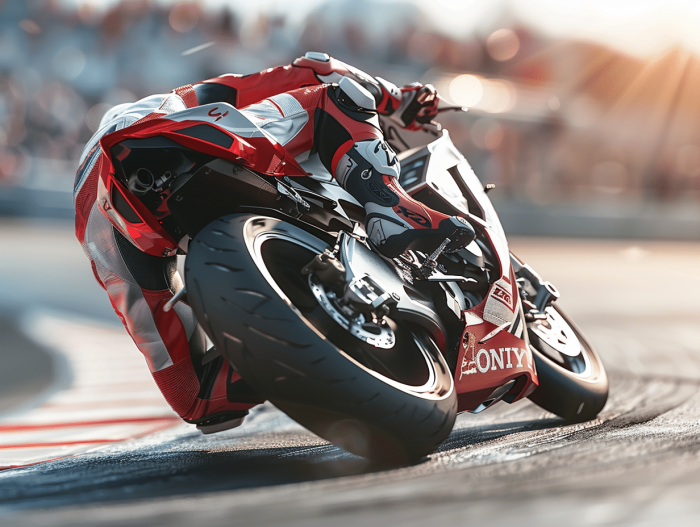
In the vibrant world of MotoGP, the performance of the bikes is scrutinized with as much precision as the skills of the riders. Each machine is a technological masterpiece, designed for speed, agility, and precision. Teams of engineers work tirelessly to refine every aspect, from aerodynamics to onboard electronics. These racing beasts, powered by the latest advancements in engine technology, are regularly subjected to in-depth analyses to measure their effectiveness on the circuits. The data collected offers a fascinating insight into the synergy between cutting-edge mechanics and human talent.
Technical Performance and Evolution of Grand Prix Bikes
In the premier category of motorcycle competitions, MotoGP power reaches an average of 260 horsepower, a mechanical feat that propels these machines to top speeds approaching 350 km/h. Flagship models, such as the Honda RC213V and the Yamaha YZR M1, showcase a power of 240 horsepower while the Ducati Desmosedici GP13 reaches 235 horsepower. These figures, although close, reveal distinct design strategies and an unending quest for optimization.
Advancements in technology are evident, as illustrated by the ‘Big Bang’ engine timing, an innovation that smooths engine behavior and improves power management. This technical feature exemplifies the increasing sophistication of MotoGP engines and their adaptation to the demands of riders and circuits. Tire grip, allowing riders to lean up to 60°, and the flexibility of frames, which absorb irregularities in corners, are other examples of technological expertise dedicated to performance.
Aerodynamic resistance, evolving with the square of speed, is a determining factor in the design of Grand Prix bikes. Significant efforts are made to reduce this physical obstacle, in order to maximize top speed while maintaining optimal handling in tight corners. Every element of the bike, from the fairing to the rider’s position, is designed to slice through the air as finely as possible.
At the heart of events such as the French GP, these bikes are not only showcases of competition but also rolling laboratories where each race brings a wealth of crucial data for the evolution of prototypes. This data, rigorously analyzed by the teams, leads to constant adjustments in a never-ending race towards perfection. The competition among manufacturers is fierce, every detail counts, and even the slightest innovation can prove decisive on the track.

Comparison of Current Performances and Analysis of Gaps Between Teams
The battle for supremacy in the MotoGP world is played out at a nearly surgical level of detail. The top models from manufacturers, notably the Honda RC213V, the Yamaha YZR M1, and the Ducati Desmosedici GP13, display powers that hover around 240 horsepower. While these figures may seem similar, the reality of the circuits highlights significant gaps attributable to less obvious elements than sheer power. Take rider weight management, for example, where a rider like Dani Pedrosa, weighing 52 kg, can provide a considerable advantage in terms of power-to-weight ratio.
The analysis of performance on the track reveals that the harmony between the rider and their machine is a determining factor. Teams work tirelessly to refine settings, adapt race strategies, and optimize every component. The results in the rider standings, the points accumulated position by position, reflect this complex chemistry. They demonstrate that the gap between teams can often be reduced to the sum of small technical and tactical victories.
When observing races such as the Qatar MotoGP, the videos of riders in action, and the results of the standings, it is evident that performance gaps are often measured in fractions of a second. These gaps are amplified or reduced by variables such as tire wear, aerodynamic resistance, and track condition management. These factors, combined with the individual talents of the riders, contribute to a precise picture of the forces at play, where every detail matters and every adjustment can change the fate of a race.