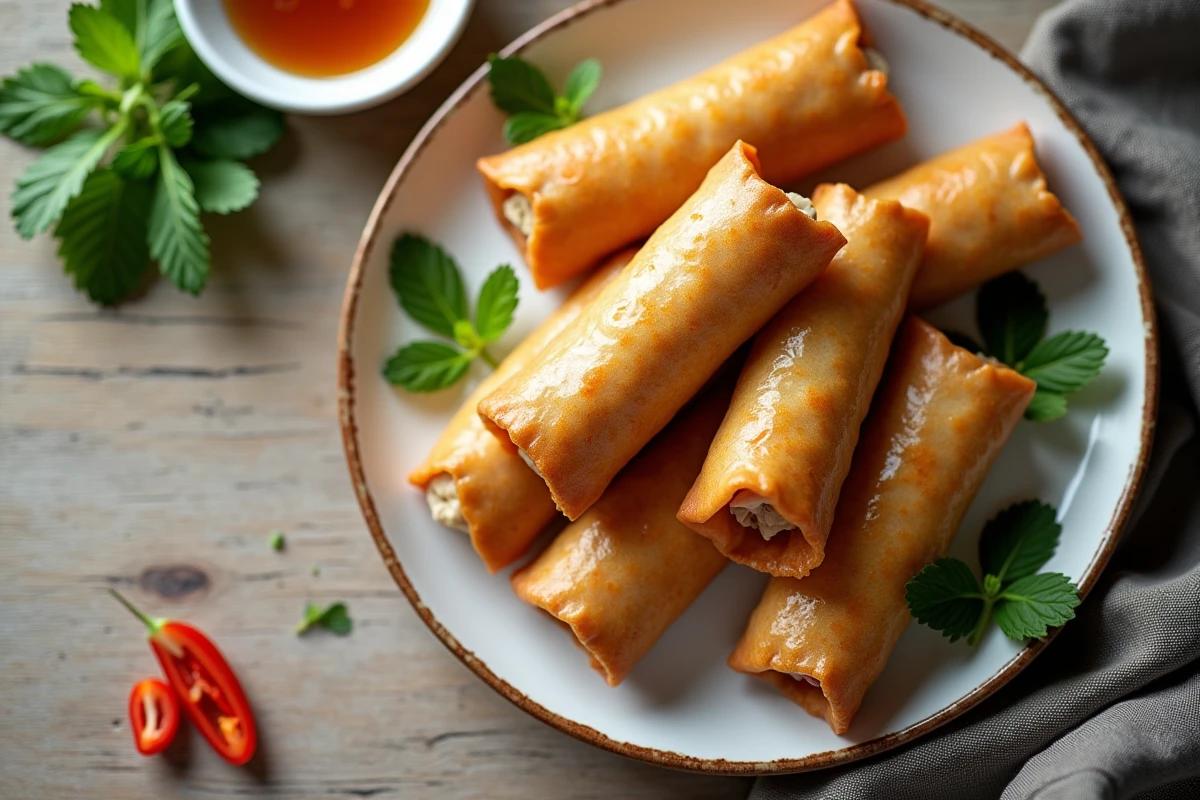
A nem rarely weighs more than 50 grams, but it concentrates a mix of carbohydrates (rice paper, vermicelli), fats (frying), and proteins (pork, shrimp, chicken). This nutritional density in such a small volume explains why the question keeps coming back: can you eat them regularly without upsetting your diet?
The answer depends less on the nem itself than on how it is prepared, what accompanies it, and its frequency in meals.
Industrial nems and NOVA classification: the real issue behind calories
The caloric value per 100 grams is not enough to assess the impact of nems on health. A parameter that nutrition research increasingly highlights changes the game: the degree of food processing.
The NOVA classification, used in studies on ultra-processed food, places many frozen or fast-food industrial nems in the category of ultra-processed products. This classification is due to the additives, flavor enhancers, and texture agents incorporated during manufacturing, rather than simply the fact that the nem is fried.
The health issue is distinct from the caloric question. Recent studies on ultra-processed food associate the regular consumption of these products with an increased risk of weight gain and metabolic disorders, regardless of the number of calories consumed. An artisanal nem made from raw ingredients (fresh meat, grated vegetables, rice paper, black mushrooms) does not have this profile, even if it is fried in the same volume of oil.
In other words, two nems with comparable energy values can have very different effects on long-term health depending on their ingredient list. Analyzing the calories and benefits of nems without considering this parameter is akin to comparing freshly squeezed orange juice and orange soda on the grounds that they contain the same number of grams of sugar.

Homemade nems baked or fried: what cooking method really changes
Baking a nem or sautéing it in a thin layer of oil reduces the amount of fat absorbed by the rice paper. This is a mechanical fact. However, the cooking method also alters the nature of the fats present in the finished product, and this is where the differences become significant for health.
Deep frying, especially when the oil is reused multiple times (a common practice in restaurants), generates lipid oxidation compounds. These compounds are absent in a nem baked at moderate temperature or quickly sautéed with good quality oil.
What concretely distinguishes a homemade nem from a restaurant nem
- The choice of oil: at home, one can opt for fresh peanut or high-oleic sunflower oil, while in fast food, frying oil is often reused across multiple servings.
- The amount of fat: a baked nem absorbs significantly less fat than a nem immersed in frying oil, even briefly.
- Control over ingredients: no modified starch, no monosodium glutamate, no preservatives. The filling remains a simple mix of vegetables, proteins, and seasonings.
- The salt content: homemade nuoc-mâm sauce allows for control over sodium intake, which quickly rises with the versions served as accompaniments in restaurants.
The homemade baked nem is not a dietary food by nature. It remains a product wrapped in a rice starch-based sheet. But it is closer to a classic cooked dish rather than an ultra-processed product, which changes its place in a regular diet.
Satiation and meal context: the nem is not eaten alone
Eating three fried nems dipped in a sweet sauce as a complete meal and eating two chicken nems accompanied by a salad of raw vegetables and plain rice do not have the same metabolic impact. Studies on mixed meals show that the integration of fibers and proteins moderates the overall glycemic load and improves the feeling of fullness.
In practice, this means that the context of the meal (side dishes, amount of sauce, drink) weighs more on the nutritional balance than the isolated caloric value of the nem. A nem filled with grated vegetables and chicken, served with a generous portion of raw vegetables, constitutes an appetizer with a nutritional profile that is not problematic.
The trap lies more in the accumulation: nems as an appetizer, fried dish, fried rice, sweet dessert. In this scenario, the nem is not the problem; it is the first link in a meal that is overall too rich in fats and refined carbohydrates.
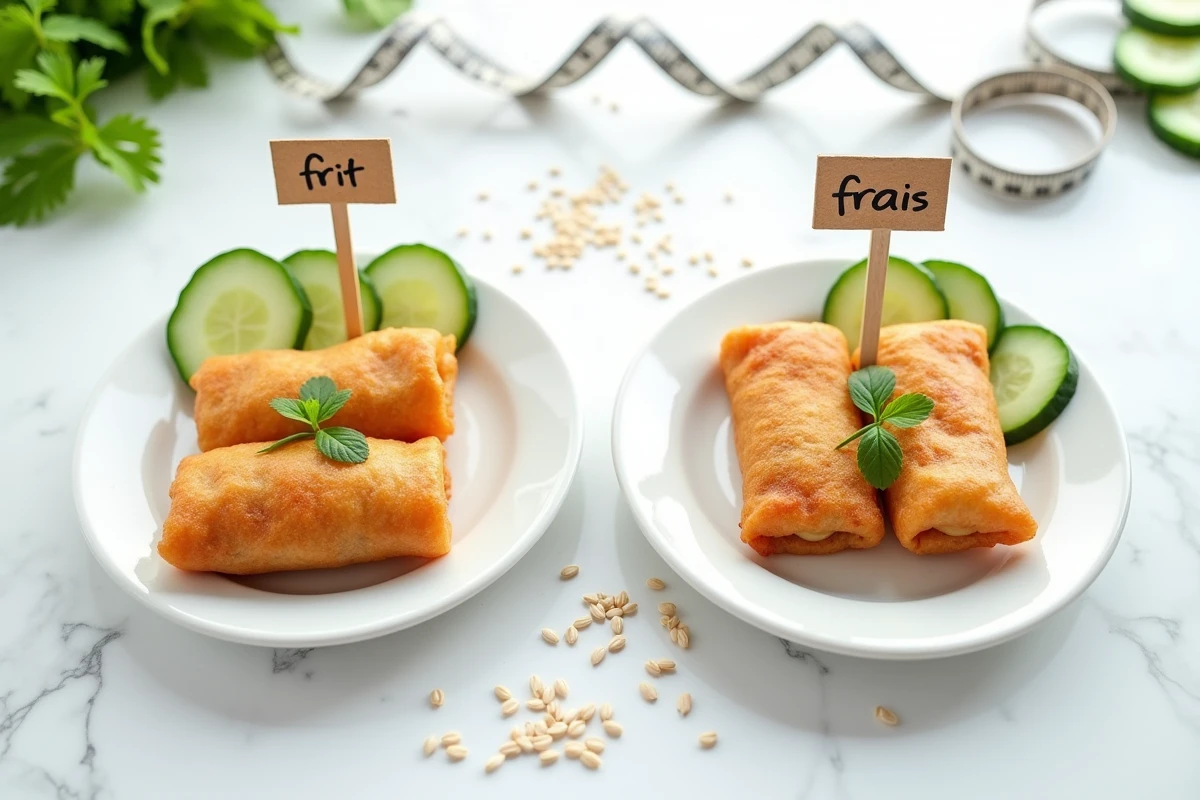
Frequency of nem consumption: where to place the cursor
The available data do not allow for setting a universal frequency threshold. Each person’s profile (physical activity, metabolism, potential health issues) makes any numerical recommendation artificial.
However, some concrete guidelines help position the nem in a balanced diet:
- One to two homemade nems per week, baked or sautéed, pose no problem within a varied diet rich in vegetables, proteins, and fibers.
- Frozen industrial nems consumed several times a week add a load of additives and salt that goes beyond the simple question of calories.
- The accompanying sauce deserves as much attention as the nem itself: a nuoc-mâm sauce diluted with lime and a bit of sugar remains moderate, while industrial sweet-salty sauces weigh down the balance.
The quality of fats and the degree of processing matter more than the number of calories per roll. An artisanal nem fried in fresh oil is still preferable to an industrial nem baked but loaded with additives. Classic nutritional tables, focused on macronutrients, do not reflect this difference.
The real impact of nems on dietary balance depends almost entirely on the choices made upstream: homemade or industrial recipe, baking or deep frying, accompaniment of fresh vegetables or fried rice, measured or generous sauce. Asking the question in terms of calories alone is to look at the problem from the wrong end.