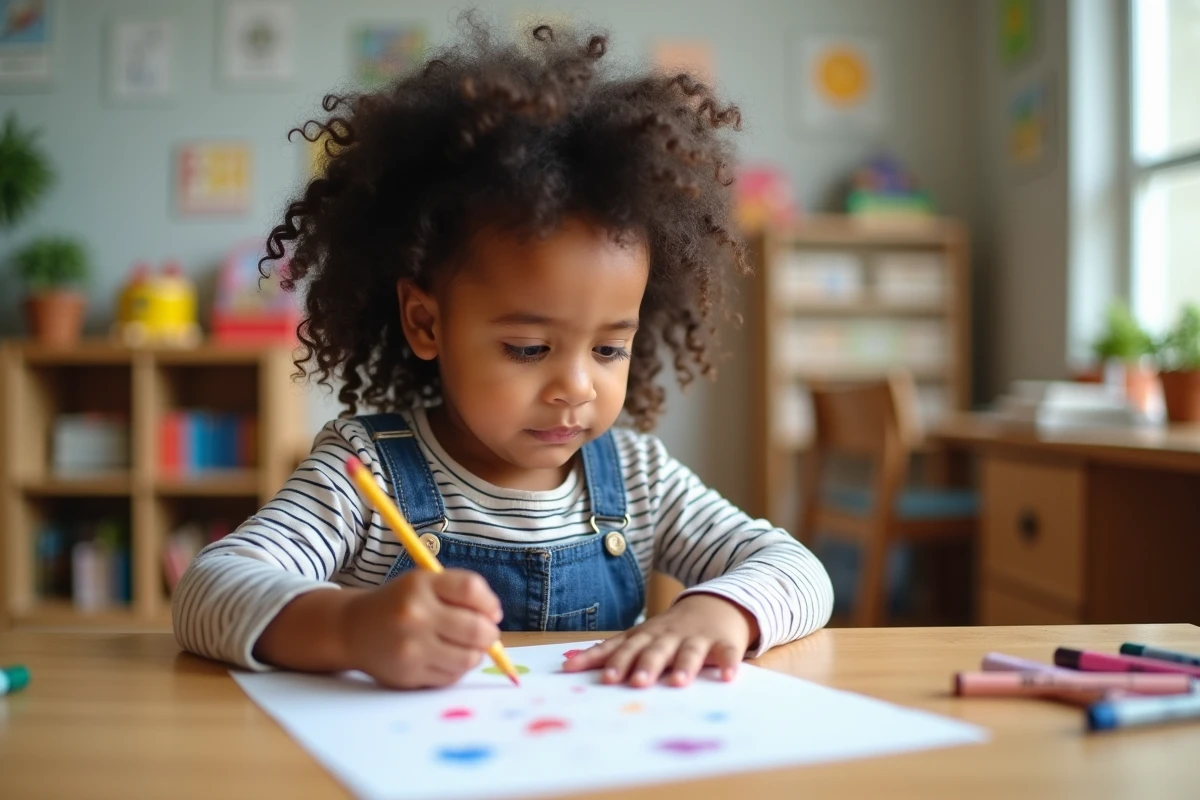
A child can master walking before speaking, but the opposite is also true. Some babies explore their environment without ever crawling, while others skip stages that were once thought essential. Developmental trajectories do not always follow a linear timeline.
Significant variations persist from one child to another, even within the same family. However, certain milestones and practices promote the acquisition of fundamental skills from the very first months of life. Tailored solutions help support each individual pace while respecting the uniqueness of each journey.
Understanding the key stages of psychomotor development in children
From birth, the child discovers the world through their senses and movement. The first months mark the beginning of a gradual adventure: grasping an object, turning their head, crawling, sitting up, and then walking. Each child’s psychomotor development follows its own timeline, influenced by neurological maturity, received stimuli, and their environment.
As the weeks go by, motor skills assert themselves through the repetition of actions. The child experiments with grasping, moves around, and finds their balance. The concept of free movement naturally emerges: allowing the child to explore without constraints. Offering this freedom of movement enhances autonomy and self-confidence. Being attentive to their pace helps avoid many unnecessary worries regarding differences between children.
Motor development goes far beyond walking. It encompasses coordination, posture, and manipulation. Cognitively, each action—observing a mobile, stacking blocks, attempting to grasp a spoon—prepares for future learning. Language, imitation, solving small problems: each action is a building block.
The website concept-enfance.fr emphasizes how important it is to respect the pace of each young child. Knowing these developmental stages allows adults to adjust their approach, stimulate autonomy, and establish solid foundations from early childhood.
What simple activities can stimulate intellectual and motor awakening on a daily basis?
Encouraging baby awakening requires neither sophisticated equipment nor complex planning. Every day, the child grows through manipulation and experimentation. Transferring games, whether filling and emptying bowls or handling spoons, develop fine motor skills and cultivate attentive observation. Manipulating a sensory ball, a piece of fabric, or a carefully chosen everyday object stimulates touch and refines coordination.
Music and nursery rhymes enrich auditory awakening. Rhythm, voice, and repetition pave the way for language and memory. Even a very simple awakening book exposes the child to new images, colors, and sounds. Turning pages, naming objects, telling a story—all of this contributes to learning.
Here are some examples of activities to propose, all accessible and age-appropriate:
- Stacking blocks to work on gross motor skills and anticipation.
- Imitating gestures and sounds to refine attention.
- Playing hide and seek with an object to understand that things exist even when they are not visible.
Montessori pedagogy inspires many households: offering objects suitable for the child’s size, allowing time to try, encouraging autonomy. Positive education is based on trust: valuing every attempt, guiding without rushing. The ideas for awakening activities are numerous, but the golden rule remains observation, listening, and respecting the pace of each early childhood.

Encouraging autonomy and meeting essential needs: guidelines to support each progress
Autonomy is not imposed; it is learned step by step. From a young age, every attempt to put on a shoe, grasp a spoon, or point to an object builds confidence. Adults often wonder: how to help without interfering? The key lies in listening to real needs, maintaining unwavering patience, and adopting the posture of an attentive observer.
Proposing age-appropriate actions, offering a few choices, and valuing every initiative: all these small details make a difference. A child gains confidence when they feel like an active participant in their daily life. Invite them to participate: tidying up their toys, washing a fruit, choosing a bedtime story. Accompanying does not mean doing it for them, but guiding, supporting, and being present without directing.
Here are some concrete guidelines to encourage this autonomy over the days:
- Take into account each child’s individual rhythm.
- Welcome emotions as they come, without minimizing them.
- Arrange the environment to offer varied and safe experiences.
Throughout early childhood, repeated actions, recognition of progress, and attention to real needs create a reassuring framework. Supporting awakening is not limited to proposing activities: it is being there, available, ready to welcome each discovery. Awakening, at its core, is this silent conversation between adult and child, where each step taken opens the way for the next. With every progress, a new adventure begins.