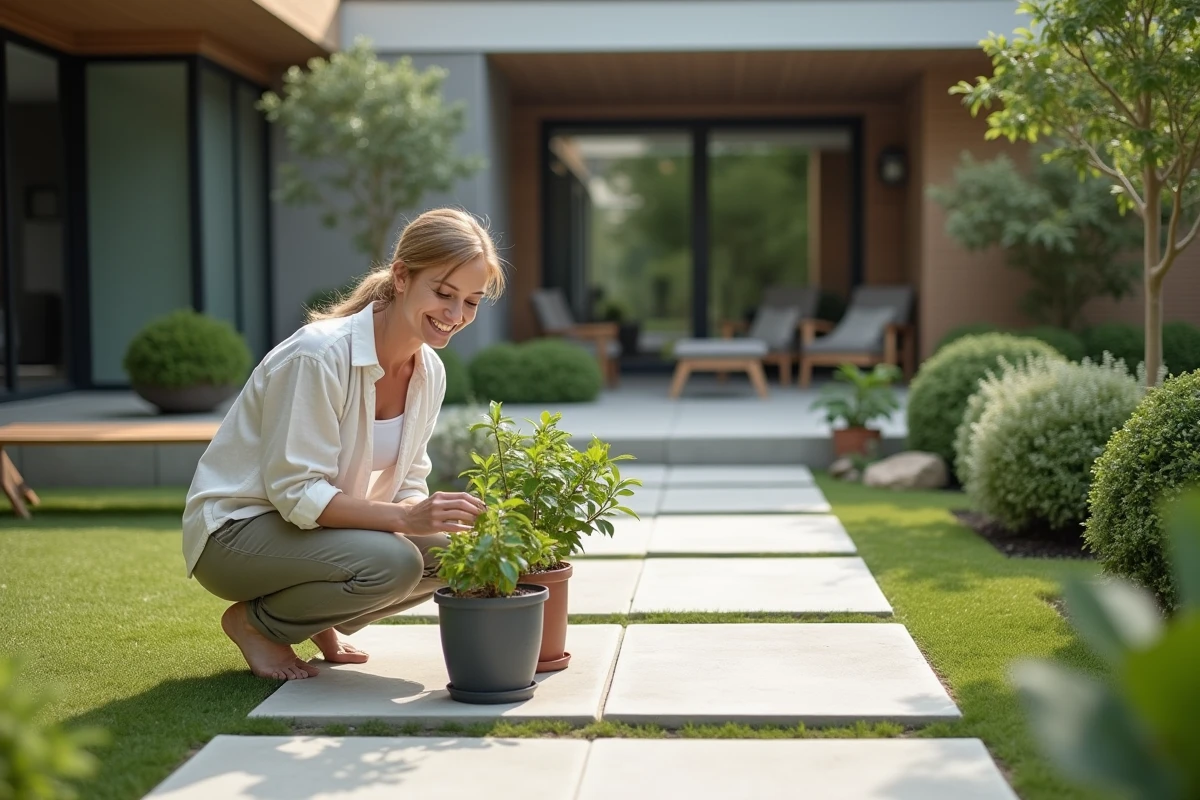
A structured outdoor space with clean lines does not always guarantee the desired balance. The combination of contemporary materials and natural elements can complicate the search for lasting harmony. The lack of transition between plant life and mineral elements sometimes accentuates the coldness of a design that was otherwise conceived according to the rules of the art.
Every choice of color, texture, or furniture influences the final coherence without any universal formula imposing itself. However, the integration of a touch of personalization allows one to go beyond standards while respecting the principles of ergonomics and functionality.
What distinguishes a modern garden and why is this style so appealing?
The modern garden asserts its signature through bold lines and clear organization. Gone are the decorative swirls or the abundance of ornaments; here, everything aims for simplicity and precision: rectangular shapes, well-defined volumes, nothing overflows from the frame. The choice of modern materials sets the tone: raw concrete, patinated Corten steel, brushed aluminum, composite wood, or natural stone come together to create a clean decor, where light plays with the material without embellishment.
In this context, the plant palette echoes the spirit of the place. Soft grasses, rigorous evergreens, Japanese maples with graphic silhouettes: these plants are chosen for their form and texture to outline the structure of the garden. Abundance has no place here: each plant is there to enhance the overall harmony, ensure visual presence from spring to winter, and support the coherence of the project. The modern garden decoration is thus built up gradually, avoiding any overload.
To extend this atmosphere, the designer garden furniture also adopts clean lines. Whether in aluminum, composite wood, or resin, it integrates seamlessly. Outdoor lighting, for its part, is not just a detail: designed from the outset, it shapes shadows, highlights perspectives, and adds depth to the night with LED spots, discreet garlands, or recessed lighting. Here, each lamp shapes the contemporary ambiance.
To visualize the power of such a design choice, the garden on the SIA Architecture site perfectly illustrates this demanding approach. From layout to material selection, through plant choice and lighting, every aspect revolves around a clear intention: to reveal a strong aesthetic and offer a renewed outdoor experience.
The keys to successful harmony: arranging spaces, choosing materials, and composing with vegetation
Creating a contemporary garden layout first requires a comprehensive, precise, and structured vision. Start by organizing the space: it is about clearly defining the terrace, pathways, relaxation areas, flower beds, or even a pond and a vegetable garden. Each area has its own utility, but the goal remains that everything articulates naturally, without breaks or a patchwork impression. To guide the eye and organize the volumes, certain structuring elements are essential: screens, low walls, fences, or pergolas. They add intimacy, rhythm the landscape, and facilitate circulation.
To establish a solid foundation, several modern materials are available to you. Here are those that work particularly well in a contemporary garden:
- Concrete, for its raw and minimalist appearance
- Corten steel, which adds an industrial yet warm note
- Aluminum, for its lightness and durability
- Composite wood, for easy maintenance and longevity
- Natural stone or ceramic stoneware, which combine elegance and robustness
The combination of these mineral textures, alternating between raw surfaces and smooth finishes, creates a refined atmosphere. The designer garden furniture, chosen in coherence with these materials, extends the contemporary dynamic without creating a visual break.
The plant composition then takes center stage. To soften the overall look while maintaining structure, favor plants with graphic forms: airy grasses, well-controlled bamboos, phormiums with ribbon-like leaves, tree ferns, Japanese maples, structured olive trees, compact conifers, or evergreen shrubs. These species offer an evolving decor that requires little maintenance and guarantees a beautiful presence all year round. The flower beds play with contrasts of textures and heights, always maintaining a balance between order and spontaneity.
Outdoor lighting becomes the finishing touch, a true signature of the garden. Integrated LED spots, discreet garlands, and plays of shadows and light sculpt the space. Each perspective is enhanced, and the pleasure of the garden continues long after sunset.
Hiring a landscape architect: how far to go to enhance your outdoor space?
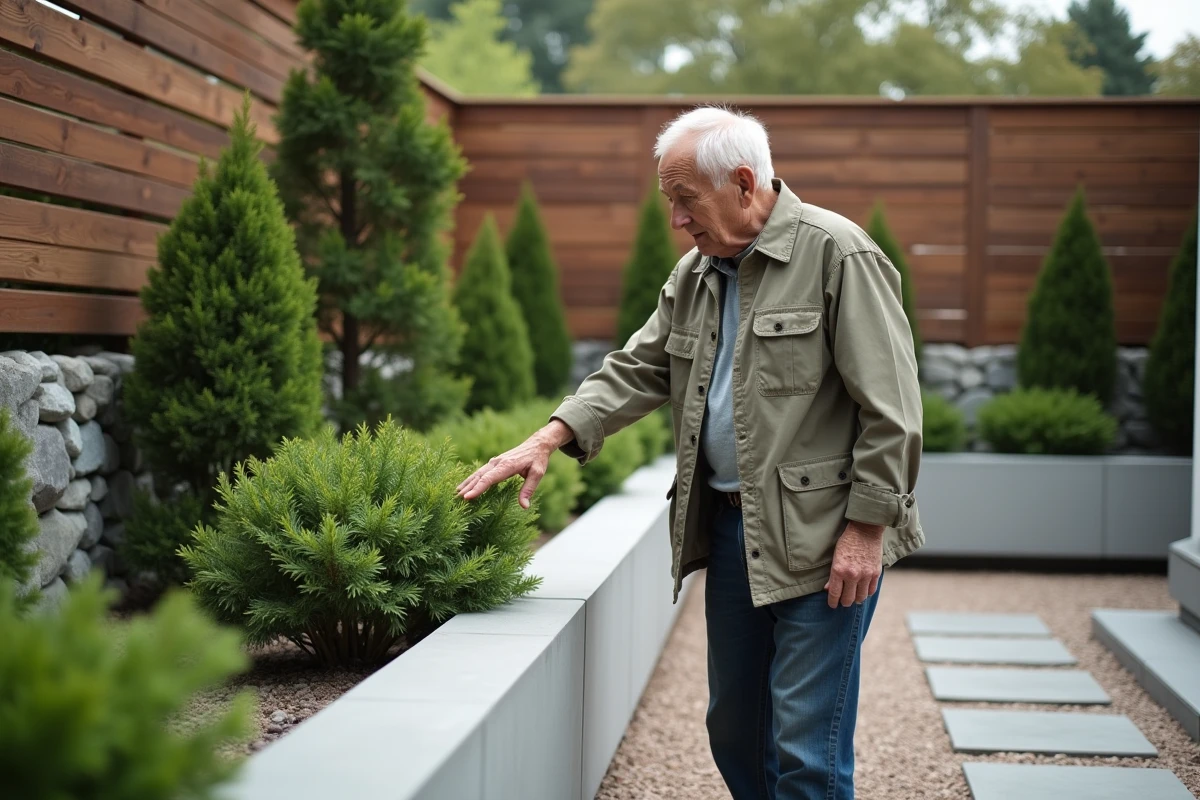
Consulting a landscape architect for the layout of your garden is a change of scale: the perspective of a professional brings coherence and accuracy to every step. With their mastery of design and composition, they analyze exposure, soil nature, and circulation flows. Their intervention is not limited to placing a few plants: they orchestrate transitions between mineral terraces, graphic flower beds, ponds, or pathways structured by screens, to shape a harmonious whole.
The current technological tools transform project preparation: the 3D design software allows you to visualize the future garden in detail, even before planting the first tree. This anticipation facilitates adjustments: volumes, perspectives, light plays, nothing is left to chance. Exchanges with the landscape architect are based on plans, sketches, and simulations to reveal the full potential of the site.
The specialist’s role goes beyond simple design: they take into account regulatory constraints, whether it involves submitting a prior declaration, respecting distances, or integrating elements such as an ELITE screen in aluminum or a composite wood fence. Certain layouts, such as adding a pond or a large terrace, may incur an development tax. Anticipate these aspects to avoid unpleasant surprises.
This expert perspective, shaped by landscape experience, gives each outdoor space a distinct and contemporary identity, without sacrificing comfort: smooth circulation, well-placed shaded areas, suitable plant choices. The custom approach marries aesthetics and technique, making the garden a natural extension of the home. A space where every detail matters, for a result that never goes unnoticed.