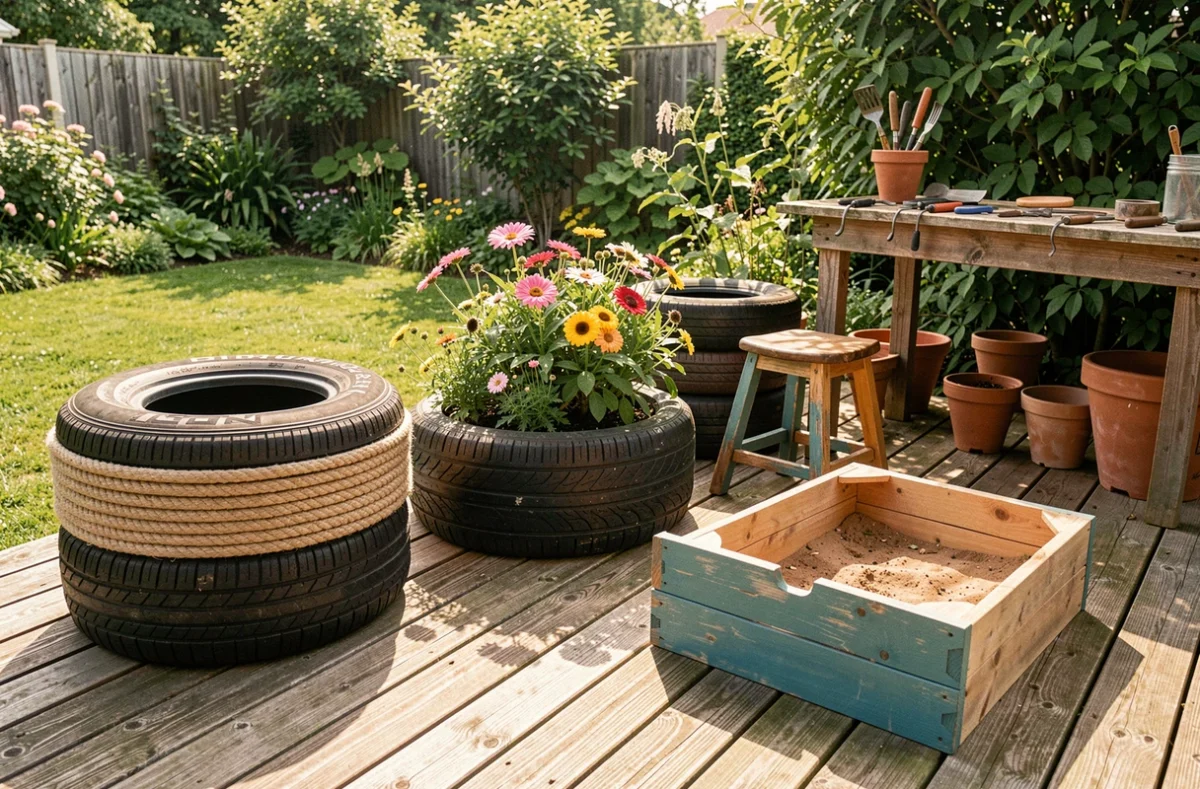
Recycling used tires into DIY objects for the home and garden requires more than just a coat of paint. Each project must incorporate drainage, structural fastening, and coating compatibility with vulcanized rubber. We review twenty concrete creations, categorized by type of transformation.
1. Sisal Rope Upholstered Ottoman
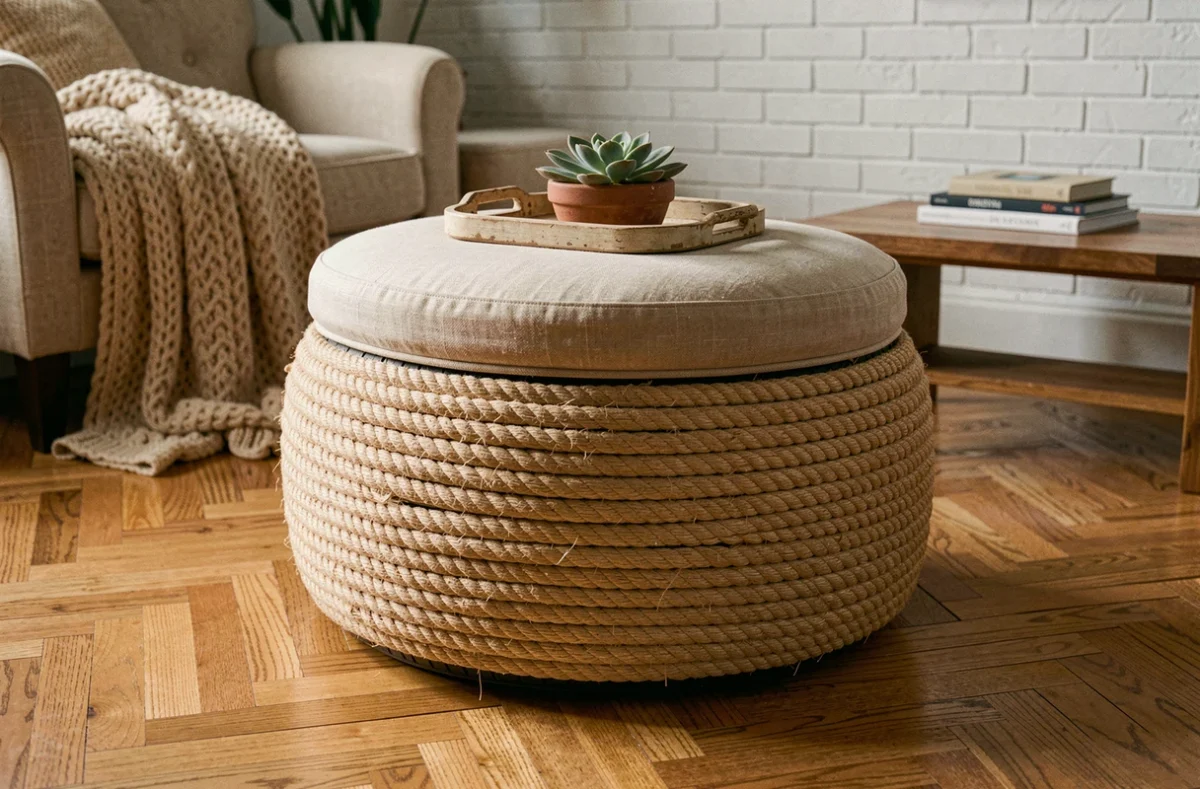
Wrapping sisal or jute rope around a tire fixed to a plywood disc creates a rigid and aesthetic seat. We recommend gluing the rope with neoprene glue rather than a hot glue gun: rubber does not handle localized hot spots well, which leads to quick detachment.
Two marine plywood discs (one on top, one on the bottom) stabilize the structure and allow for wooden legs to be screwed in. The result easily supports the weight of an adult.
2. Raised Planter with Drained Bottom
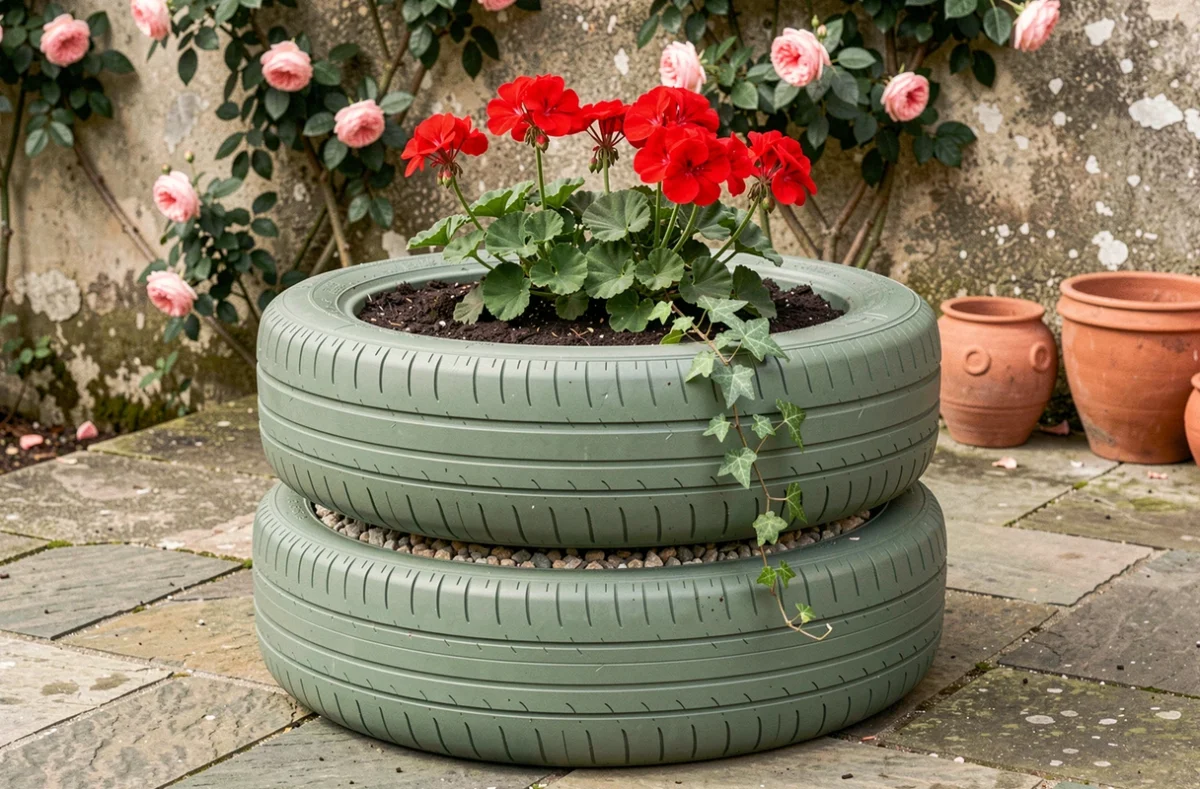
A tire laid flat and filled with potting soil forms a weather-resistant container. The technical point not to overlook: drill several drainage holes in the lower tread. Without this, water stagnates inside and the tire cavity becomes a breeding ground for mosquito larvae, especially in areas where the tiger mosquito is present.
Several creative projects of DIY tires on Vidéos du Net illustrate this type of creation with colorful finishes using exterior acrylic paint.
3. Sealable Sandbox for Kids
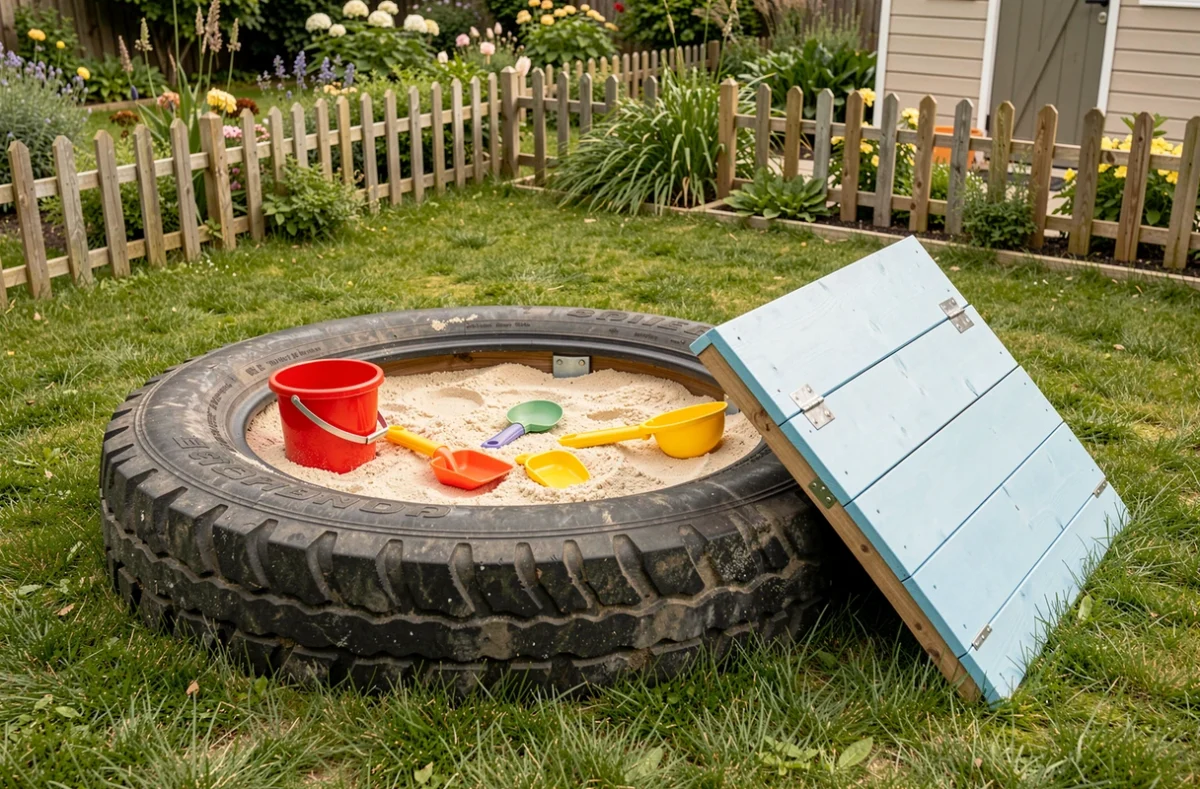
A tractor or agricultural tire, with a large diameter, provides a naturally defined sandbox. The tread serves as a seating edge for children. We advise carefully sanding the inner sides to remove any sharp metal wire splinters after cutting.
Adding a removable tarp on top prevents animals from accessing it at night. Painting the exterior with UV-resistant plastic or rubber paint extends the color’s durability.
4. Coffee Table with Tempered Glass Top

Stacking two tires of the same size, securing them with through screws, and placing a tempered glass top on top creates a robust coffee table. Tempered glass is non-negotiable: ordinary glass shatters under a sudden impact on a soft surface like rubber.
The inside of the tires can be used for storage. A fabric stapled to the upper side hides the void and holds stored items.
5. Classic Hanging Swing

The tire swing remains the most common DIY project. The point of caution is the fastening: a stainless steel screw carabiner and a sufficiently thick braided polyester rope prevent wear from rubbing against the rubber.
Drilling three to four holes in the bottom of the tire drains rainwater and prevents children from sitting in a stagnant puddle.
6. Vertical Vegetable Garden with Stacked Tires
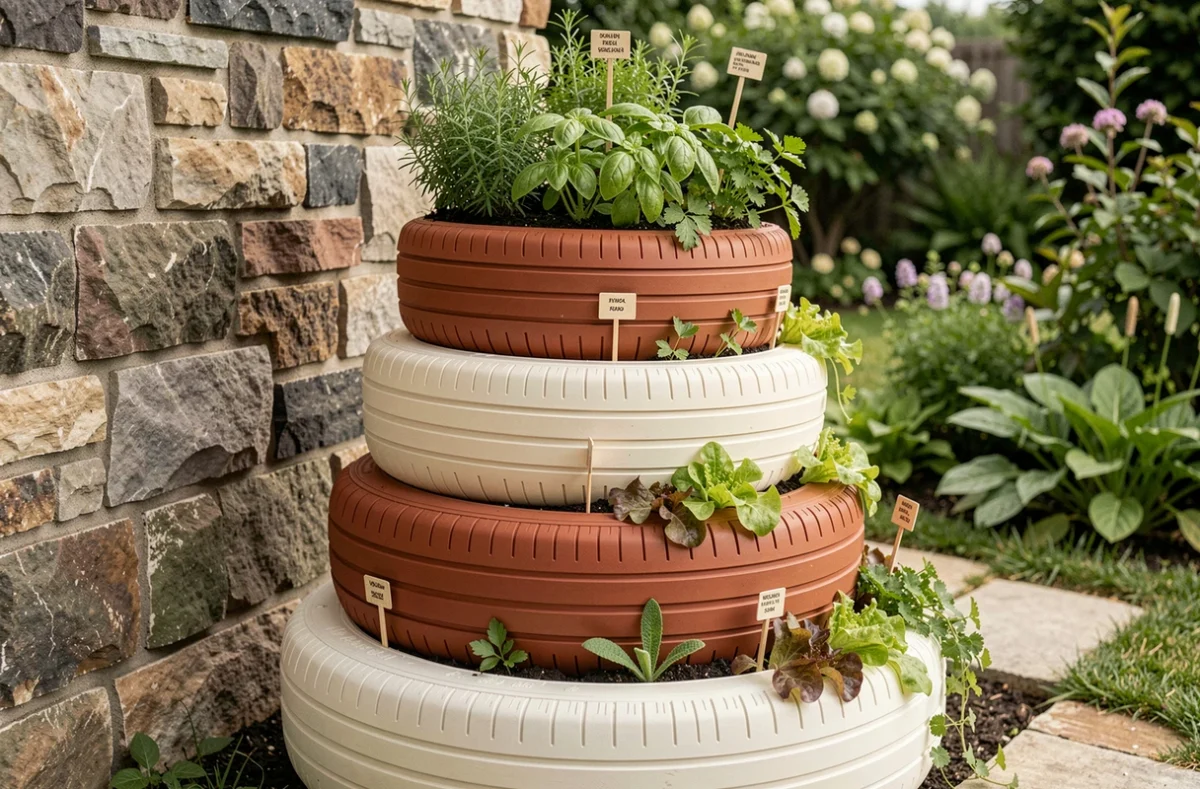
Stacking three to five tires of decreasing diameters creates a pyramid structure for planting herbs or strawberries on each level. Each tire must be drilled laterally to insert the plants and ensure water circulation between levels.
This setup occupies less than one square meter of ground, making it suitable for balconies or small terraces. The filling is done layer by layer with a potting soil-perlite mix.
7. Indoor Pouf Upholstered with Foam

Covering a tire with high-density foam and durable upholstery fabric produces a solid pouf. The foam is glued to the outer face of the tire, then the fabric is stapled under the bottom disc.
Unlike the rope ottoman, this pouf offers superior seating comfort due to the foam thickness. Disassembly remains simple for washing the cover.
8. Wall Mirror Framed with Tread

Cutting the tread from a tire, cleaning it, and attaching a round mirror with silicone gives an industrial-style frame. The black rubber contrasts with the glass and fits into a raw or loft interior.
The cutting is done with a reinforced cutter or a jigsaw with a metal blade. Be careful of internal steel wires: cut-resistant gloves are necessary.
9. Half-Tire Wall Shelf
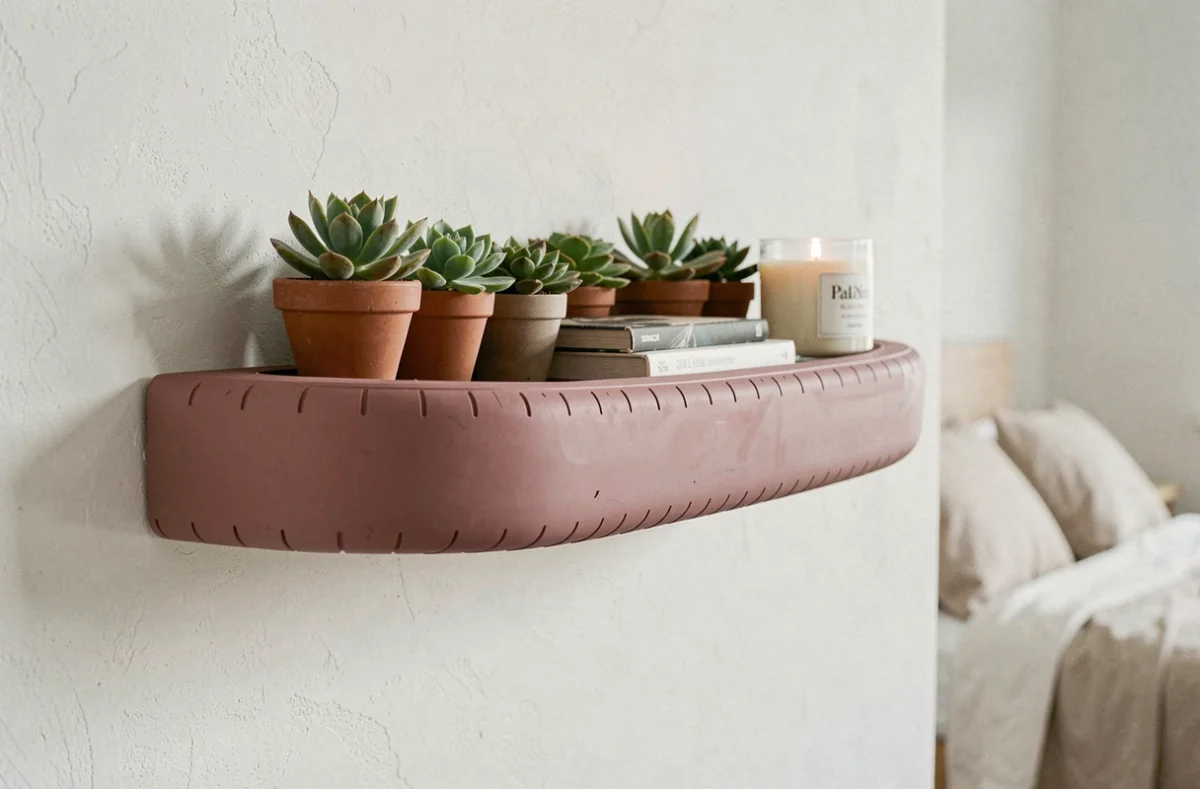
Cutting a tire in half widthwise, fixing a small board inside to create a flat bottom, and screwing the whole assembly to the wall produces an original shelf. It is suitable for lightweight items: flower pots, books, small containers.
The wall mounting requires appropriate anchors for the support (drywall, brick, concrete). The weight of the empty half-tire remains moderate, but the added contents require checking the allowable load.
10. Pet Bed

A cleaned, sanded, and painted tire with non-toxic paint forms a solid bed for a dog or cat. A round cushion cut to the inner dimensions completes the seating.
The rubber withstands scratches and is easy to clean. We recommend using a water-based solvent-free acrylic paint to limit residual emissions.
11. Flower Bed Border
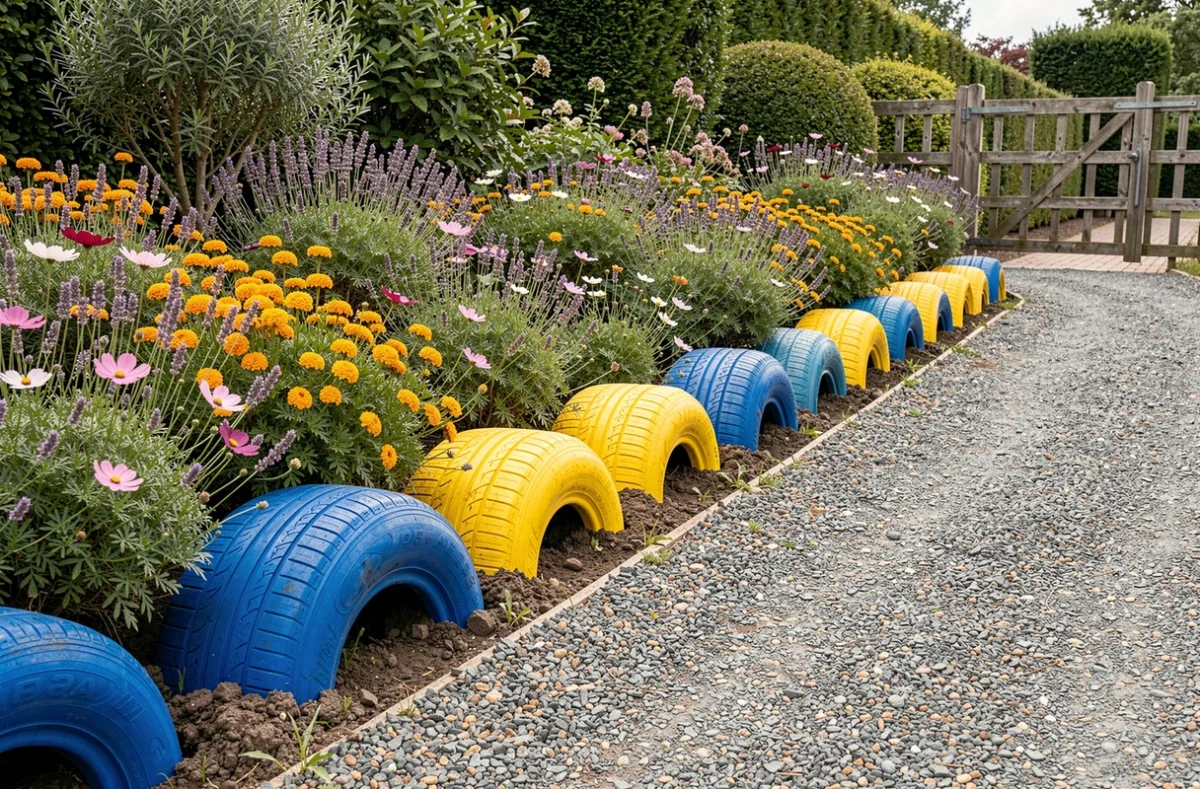
Burying half-tires vertically in a line neatly defines a flower bed or path. Painted in bright colors, they add graphics to the garden while containing the soil.
Durability is excellent: rubber does not rot and withstands frost. However, the slow degradation of the rubber in the soil justifies removing the borders if the project is abandoned, in accordance with the principle that a tire object remains a waste tire once dismantled.
12. Outdoor Hanging Light
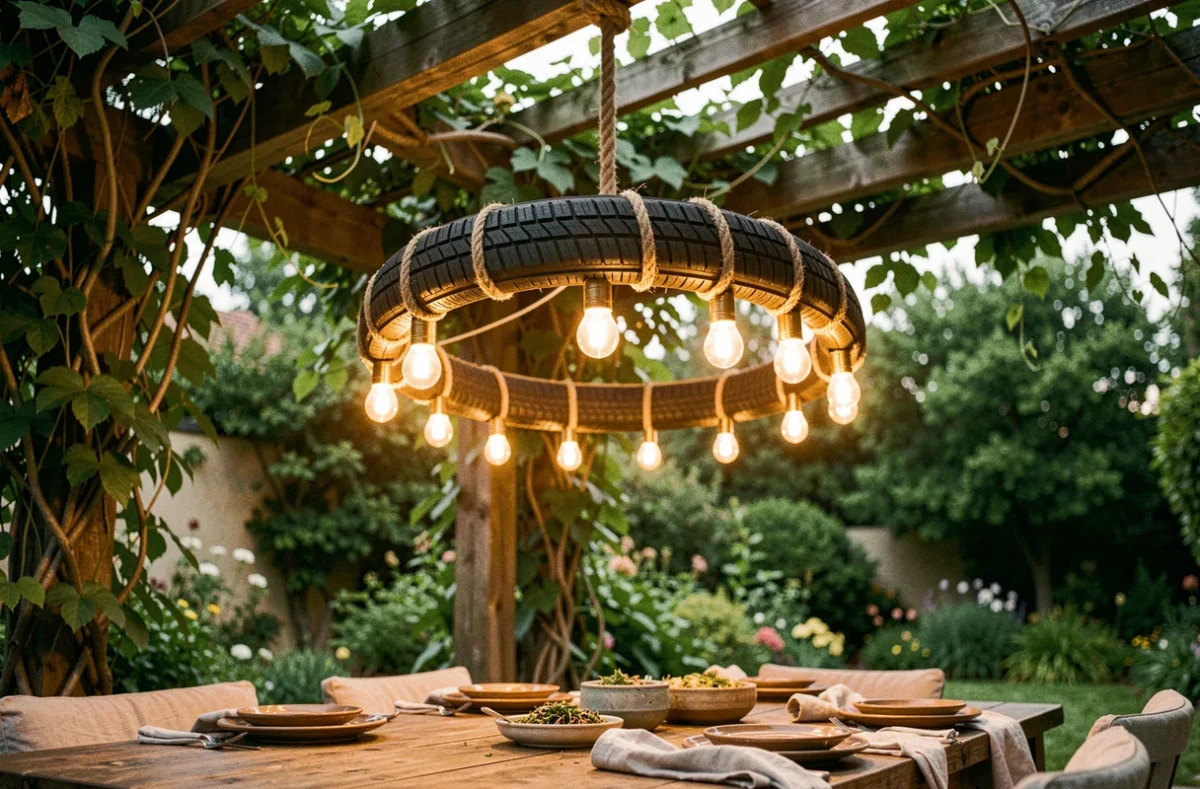
A bicycle tire, thinner and lighter than a car tire, is well-suited for making a hanging light. Wrapping a low-voltage LED string around the rim and suspending the whole assembly from a branch or pergola creates ambient lighting.
Low voltage (12 V or 24 V) is preferred outdoors for electrical safety reasons. The wiring passes through the center of the tire and connects to a sheltered transformer.
13. Painted Stackable Stool
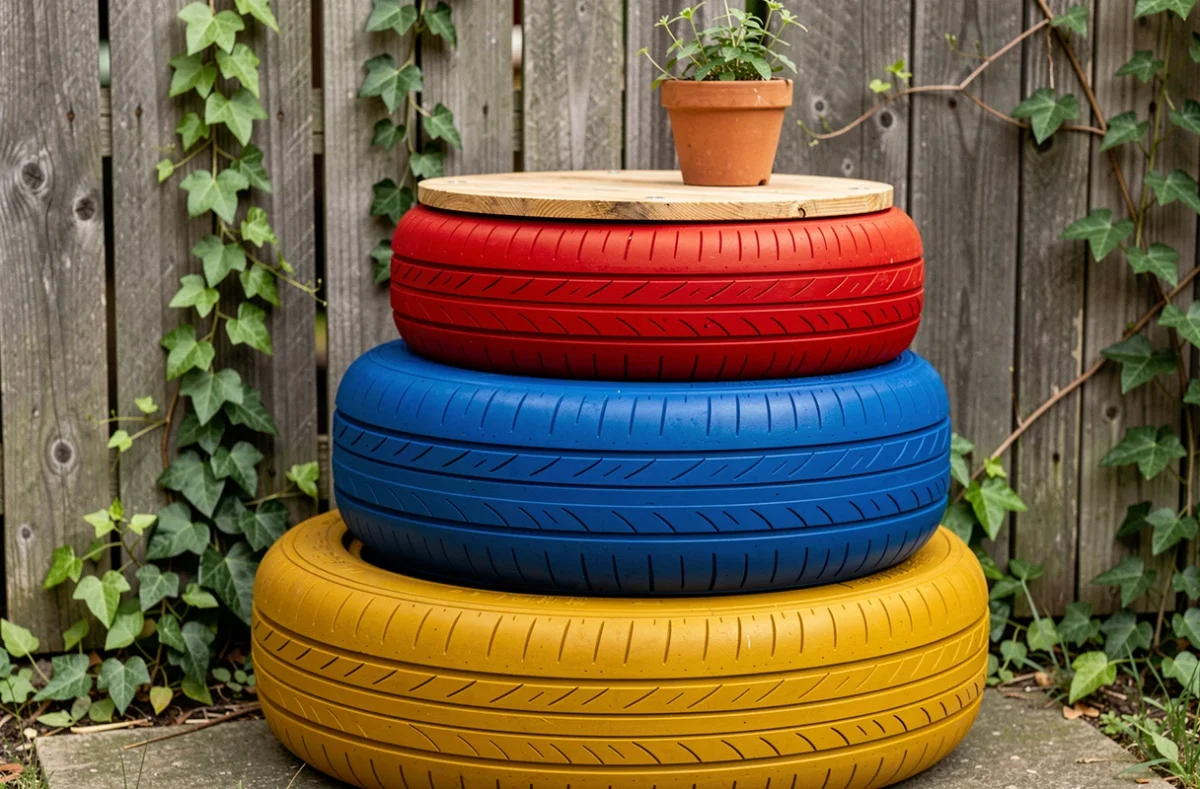
A small tire (like a wheelbarrow or trailer tire), placed on a turned wooden base and painted in a bright color, forms a stackable accent stool. Two or three units stack without slipping thanks to the natural grip of rubber.
This format is suitable for children’s rooms or terraces. The limited weight makes it easy to move.
14. Two-Seat Children’s Seesaw
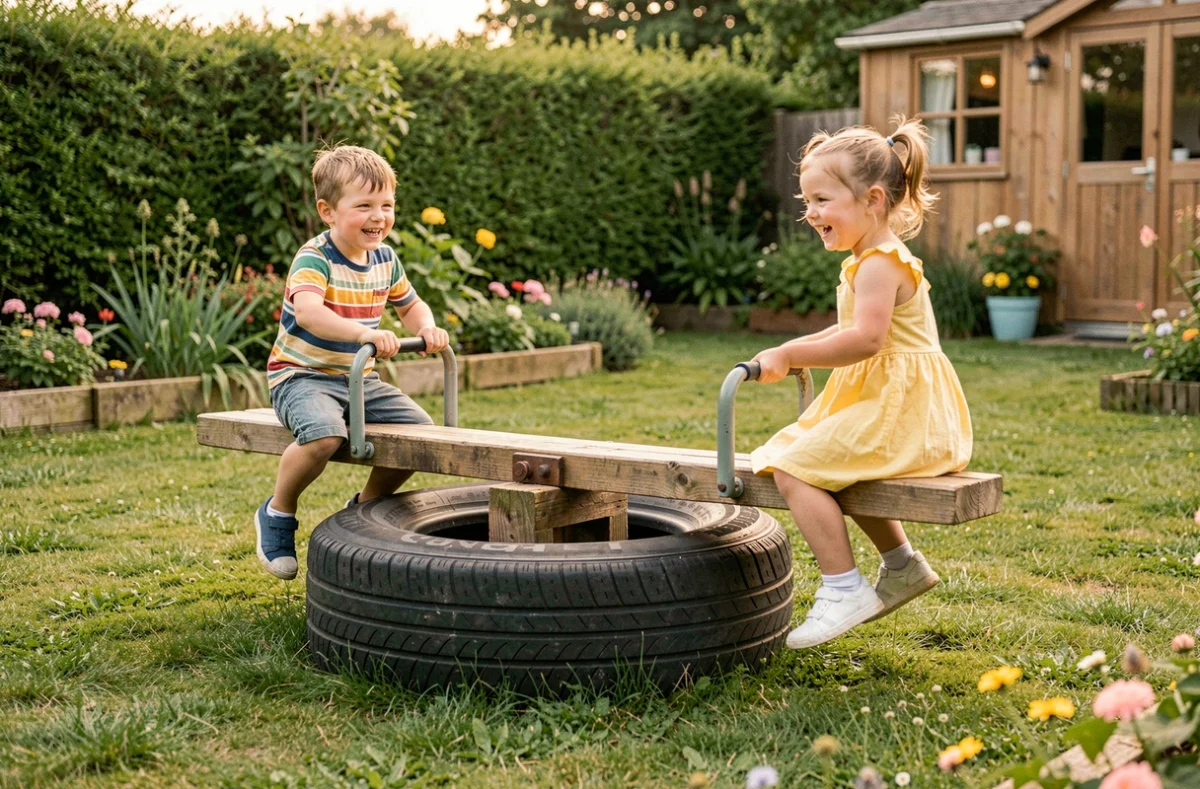
Cutting a tire in half along the diameter gives a rounded base. Screwing a treated wood board on top and adding two side handles creates a seesaw for two children.
Sanding and covering the cut edges with thick tape or a rubber profile protects hands. The seesaw works on grass, less so on hard ground where it slips.
15. Stacked Garden Composter
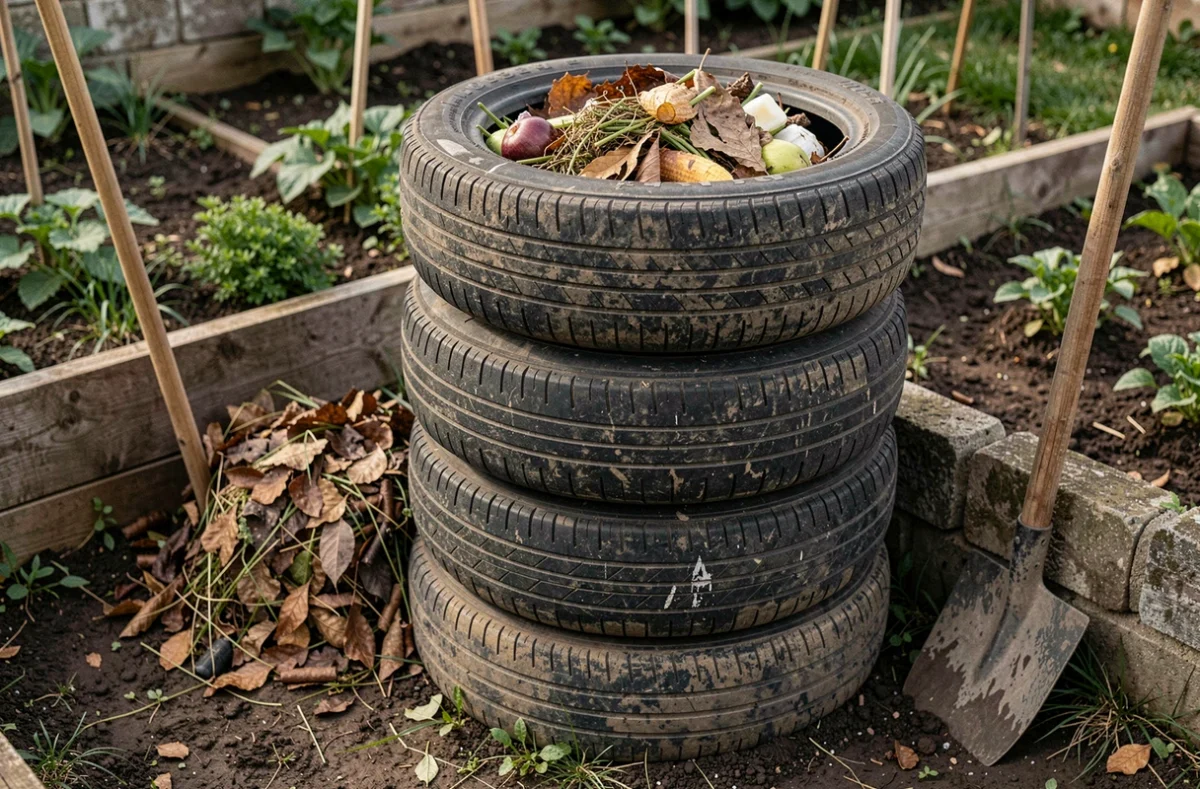
Stacking three bottomless tires and drilling ventilation holes in the sides creates an effective composter. The black color of the rubber absorbs solar heat and speeds up decomposition.
Turning the compost is done by lifting the tires one by one. This system is suitable for small gardens where a wooden composter would take up too much space.
16. Wall Hose Holder
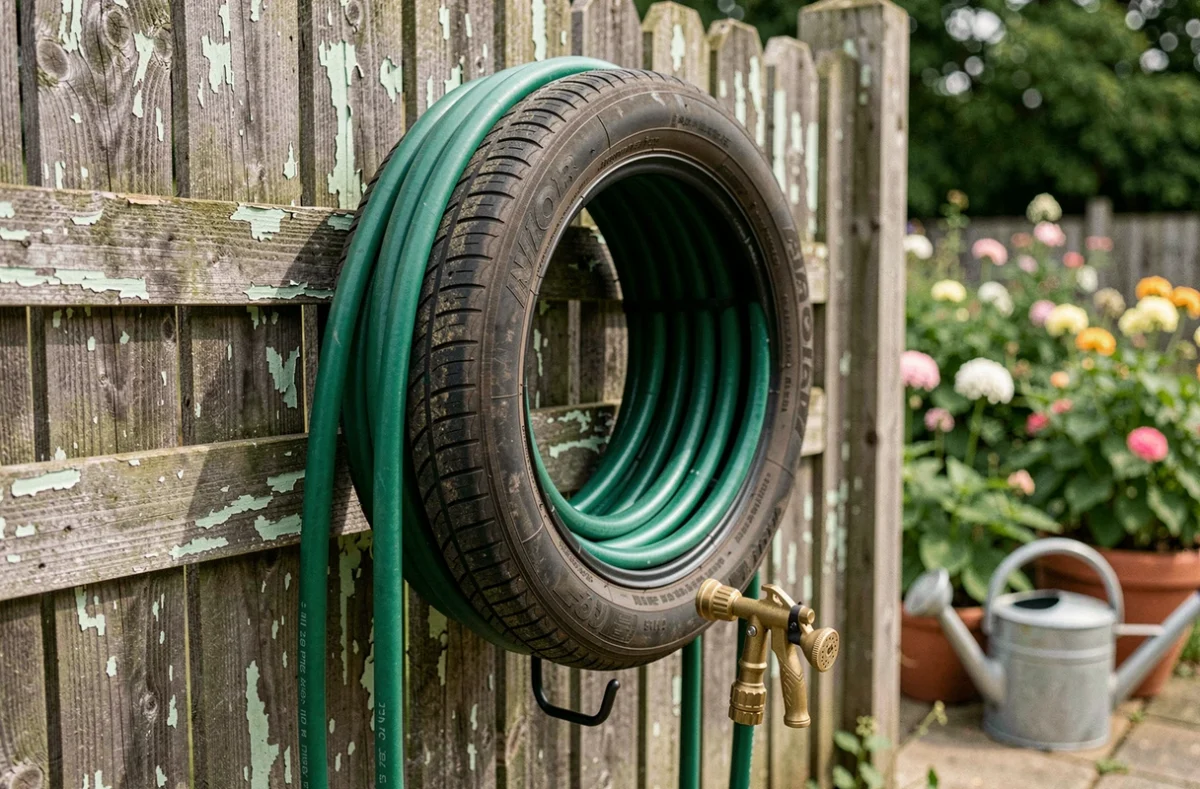
A tire screwed to the wall of a garden shed serves as a support for coiling a hose. The inner diameter guides the hose in a regular spiral and prevents kinks that damage the hose.
This project can be completed in less than an hour with four wood screws and anchors. It is one of the most practical and least visible repurposings.
17. Garden Staircase with Gravel-Filled Tires
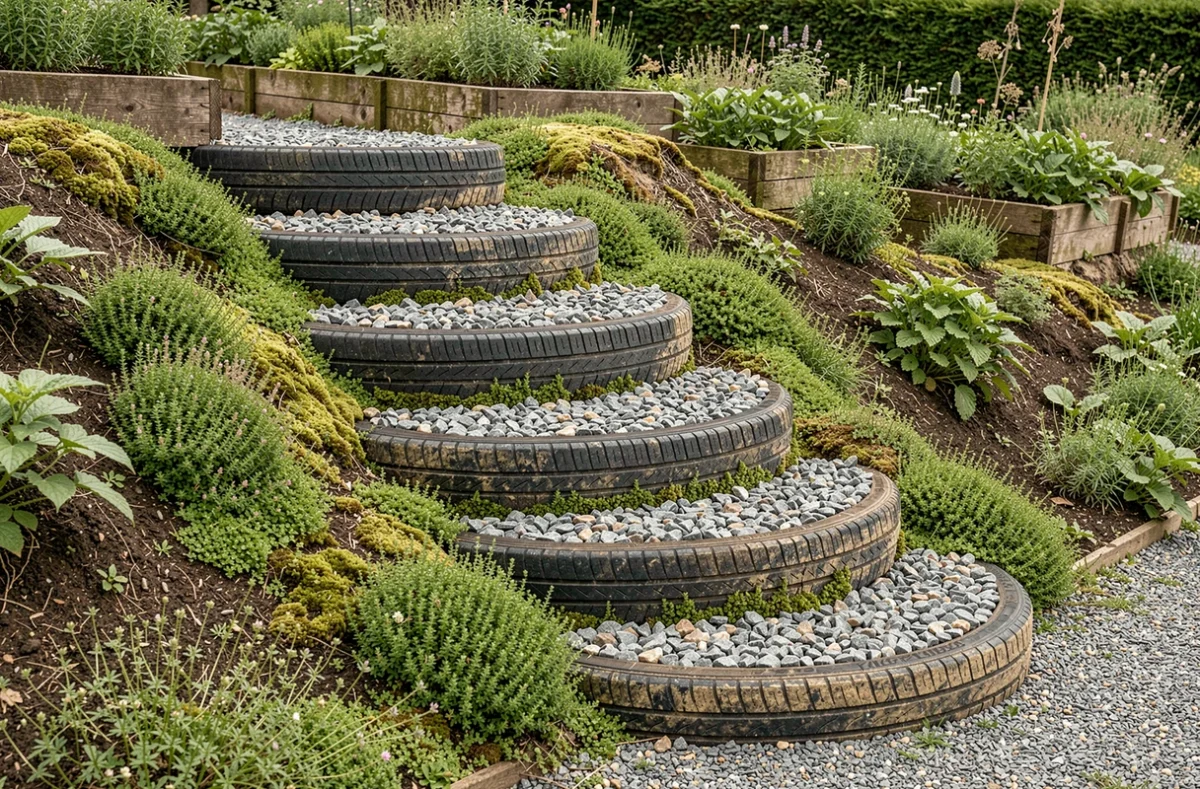
On a sloped terrain, arranging tires in a staggered pattern, filling them with compacted gravel, and anchoring them to the ground with metal stakes creates a stable staircase. Rubber provides good traction underfoot, even in wet weather.
This setup replaces expensive rockeries on low gradients. The gravel must be tightly packed to prevent sinking underfoot.
18. Animal Sculpture for the Garden
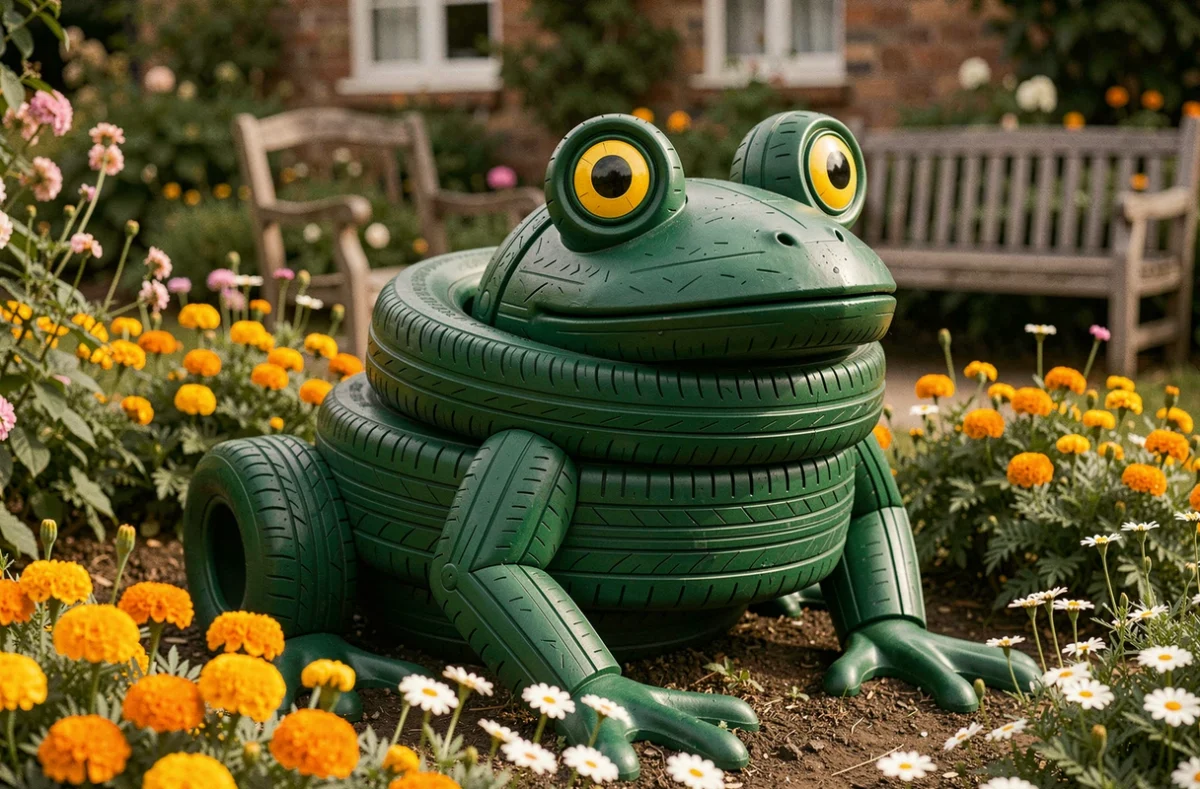
Swan, bear, or parrot sculptures made from cut and painted tires remain a classic of outdoor DIY. Cutting with a cutter requires patience and a prior cardboard template.
Exterior acrylic paint adheres well to sanded rubber. A minimum of two coats is necessary for an opaque finish.
19. Hanging Planter with Chains
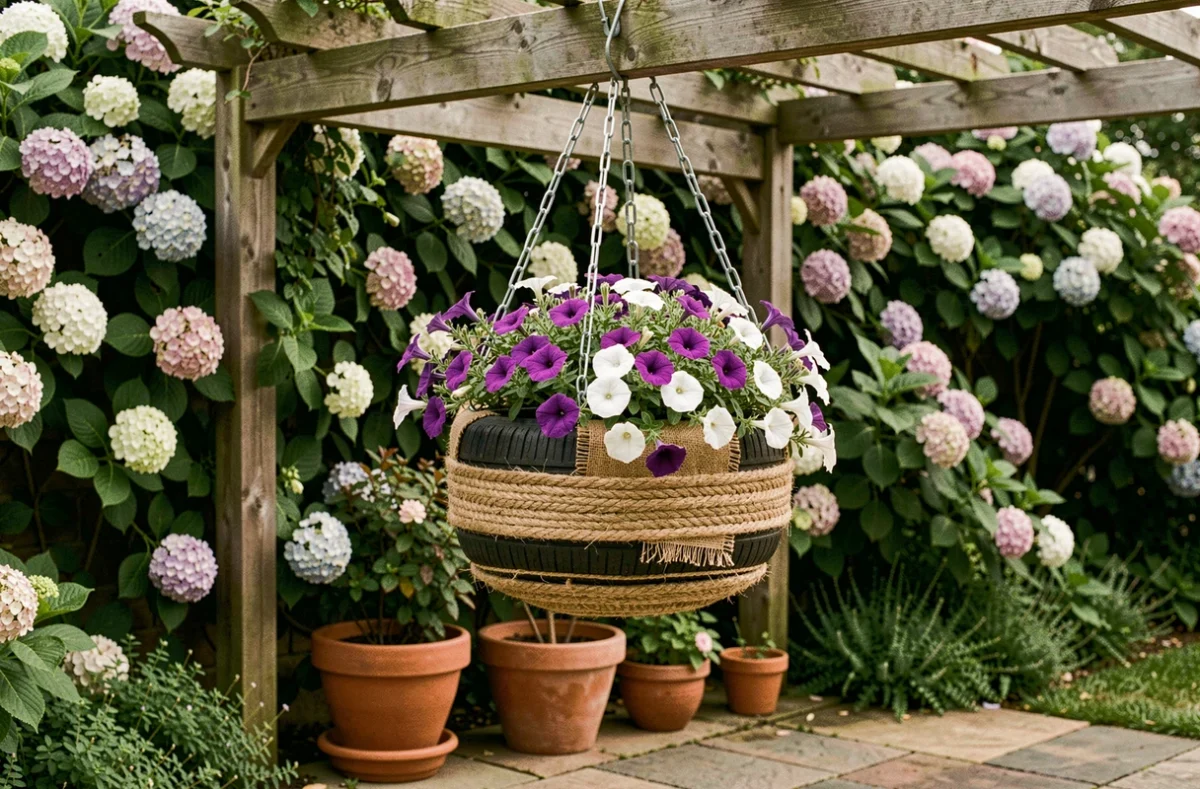
Suspending a tire horizontally by three equidistant chains and filling the cavity with potting soil creates an aerial planter. Trailing flowers (petunias, surfinias) spill over the center and sides for a dense visual effect.
Drilling the bottom of the tire is mandatory to prevent water stagnation and the previously mentioned mosquito issues.
20. Woven Swing Seat

Removing the central tread from a wide tire, weaving polypropylene straps into the opening, and suspending the whole assembly from a wooden structure creates a comfortable swing. The flexibility of the woven straps replaces a cushion and dries quickly after rain.
The supporting structure must be sized to support a dynamic load (swaying movements), which requires larger wood sections than a simple static swing.
Each recycled tire project benefits from being thought out until its end of life. An abandoned rubber object left outdoors degrades slowly and leaves residues in the soil. The French collection system for used tires ensures free take-back through garages and authorized centers: if a tire furniture or decor is no longer needed, returning it to the material recycling circuit remains the best option.