
On a a rainy Saturday morning, three children to entertain and a tight budget: it’s often in this situation that we look for a leisure activity, not in a catalog of dreams. The choice of an outing or leisure activity depends less on current trends than on very concrete constraints, such as available time, price, distance, and the physical abilities of each participant.
Free or low-cost activities: the most underestimated playground
We rarely think of the resources already present around us. State forests, marked trails by municipalities, public libraries, or community workshops provide a foundation of activities accessible without reservation or entry fees.
Price has become a determining factor in choosing an activity. According to an Odoxa survey for RTL, some French people give up on a sport they consider too expensive, with a particularly marked impact on young people, lower-income groups, and families. Distinguishing free options from paid options is not a detail of presentation; it is a condition for the selection to be useful.
Among the concrete options with little or no cost:
- Urban or peri-urban hiking, which can be done without specific equipment and is adaptable to all levels. A two-hour walk in a regional park is a great substitute for half a day in an indoor play area.
- Free workshops at the media library (board games, coding introduction, themed readings), often unknown despite running all year round, not just during school holidays.
- Outdoor group classes organized by local sports associations, offering trial sessions without commitment, from yoga to paddleboarding to pétanque.
You can also explore leisure activities on Rockette Libre to find ideas that break away from the usual circuit, categorized by type of practice rather than by budget.
Outdoor leisure and independent sports practice: what really changes
Sports practice is shifting towards autonomy and the outdoors, according to the National Barometer of Sports Practices 2025 (INJEP/Crédoc). This evolution favors activities that are less dependent on schedules, supervision, or reservations.
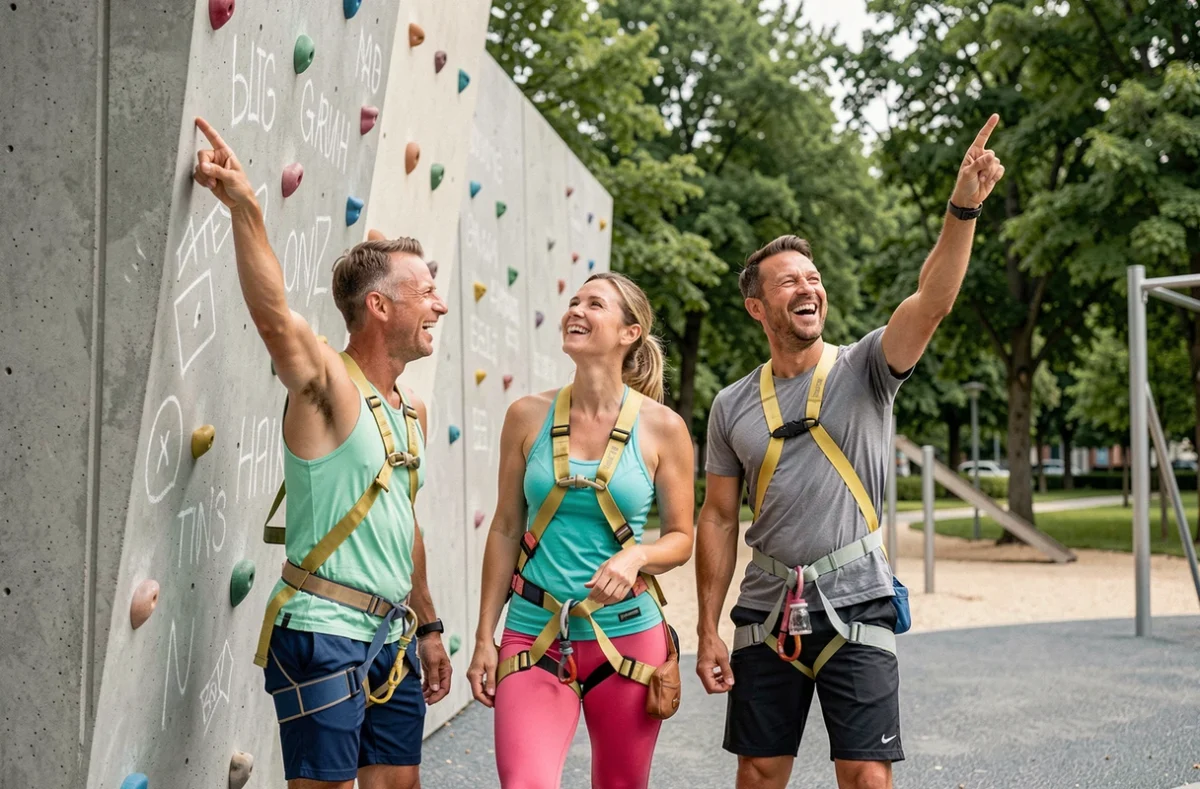
In concrete terms, this means that activities like running, cycling, Nordic walking, or climbing in natural sites are gaining ground over club sports with fixed time slots. Practice autonomy is becoming a selection criterion as important as the type of sport itself.
Outdoor activities accessible without a club or subscription
Trail running, open water swimming, or geocaching require neither registration nor annual fees. One invests in a decent pair of shoes or a swimming mask, and the rest depends on the available terrain. For families, geocaching works particularly well: children search for GPS caches like a treasure hunt, and the activity can be done anywhere, in the city as well as in the forest.
Paddle, on the other hand, is halfway there. It requires a court reservation but remains accessible to beginners from the very first session. Its rapid growth in France reflects this search for activities with low entry barriers and a strong social dimension.
Cultural outings: real barriers and concrete alternatives
The 2025 cultural outings barometer from the Ministry of Culture notes a slight decline in cultural outings. The decline affects all major categories: cinema, museums, libraries, festivals, theater, dance, and circus. The main barriers cited are lack of availability, perceived lack of interest, and fear of excessive crowds.
These barriers are interesting because they are not all related to price. Crowds and available time weigh as much as the budget in the decision to go out or not.

Short and unconventional formats to bypass these barriers
Here are some ideas that work on the ground:
- Flash museum visits (one hour, one theme, no waiting line) offered during the week by some municipal establishments.
- Micro-neighborhood festivals, often free, that combine live music, hands-on workshops, and local food over half a day.
- Cultural or historical escape games, which mix puzzle-solving and heritage discovery. They attract an audience that would not step through the door of a traditional museum.
Feedback varies on this point, but several media libraries are also testing game nights open to all, a hybrid format between leisure and culture that attracts very different audiences.
Accessibility of leisure activities and the Tourism and Disability label
When we talk about activities “for all tastes,” the question of physical and sensory accessibility often remains absent. The state brand Tourism and Disability identifies sites and activities adapted to the four families of disabilities (motor, visual, auditory, mental). Spotting this label before booking avoids unpleasant surprises upon arrival.
Checking accessibility before booking should be a reflex, not a separate step. Several leisure platforms do not clearly display this information, which forces one to contact each provider individually.
For organized trips aimed at people with disabilities, the Adapted Organized Holidays (VAO) program regulates the conditions of reception and safety. This regulatory framework, overseen by the DRIEETS in Île-de-France, guarantees a minimum level of support.
Selecting a leisure activity that truly works means crossing three filters: the actual budget, the available time, and the abilities of each participant. There is no shortage of idea lists. What is lacking is an honest sorting between what is accessible and what is not, according to one’s own situation.