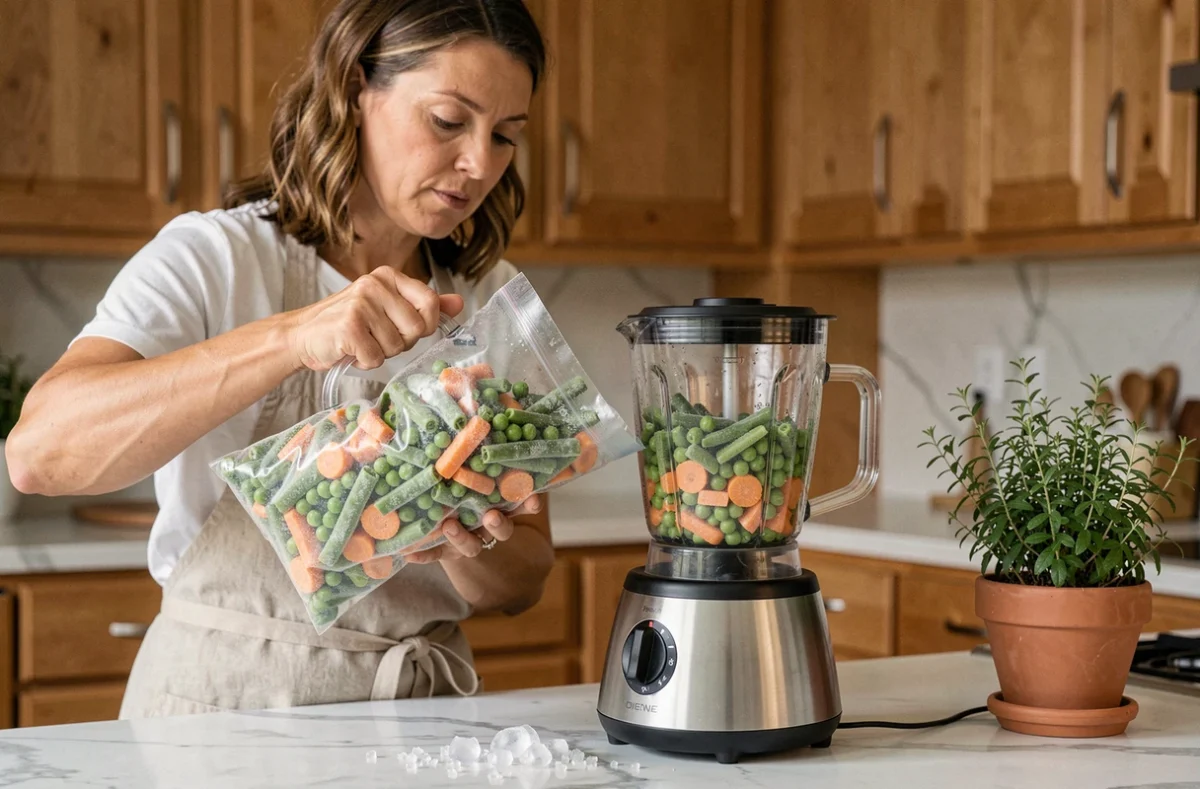
Frozen vegetables account for a growing share of food purchases in France, and using them in heated blenders is becoming common well beyond the colder months. The promise is simple: pour still-frozen vegetables into the jug, add liquid, start a program and have soup ready in under half an hour.
User feedback on forums shows that results vary depending on the appliance, the vegetables chosen and, above all, how the liquid is managed. Understanding what happens when the texture of frozen vegetables meets the mechanics of a heated blender helps prevent watery soups and failed cooking cycles.
Freezing and cell structure: what changes in the jug
Freezing weakens the walls of plant cells. Ice crystals formed during industrial processing rupture some of the membranes, releasing more water during cooking. In a conventional saucepan, this extra water blends into the broth without being noticed.
In a heated blender, things are different. The jug is sealed, the liquid volume is set at the start, and the water released as the vegetables thaw adds to the total volume. The result is a thinner soup than expected if the proportions have not been adjusted. This affects high-water-content vegetables (courgettes, tomatoes, spinach) more than root vegetables (carrots, parsnips, sweet potatoes), which retain a denser structure after freezing.
Before systematically reducing the amount of liquid, you should also use frozen vegetables in a heated blender with each appliance’s specific features in mind: some models heat from the bottom and struggle to reach the right temperature if the block of frozen vegetables is too compact.
Liquid quantity and frozen vegetables: adjusting the ratio
Most heated blender manuals specify a maximum fill line and a minimum liquid volume to ensure the heating element works properly. These guidelines are calibrated for fresh, chopped vegetables at room temperature.
With frozen vegetables, two variables change at the same time: the apparent volume (frozen pieces take up more space) and the water released during cooking. The room for adjustment lies in the amount of stock or water added at the start.
Reduce the liquid without disrupting heating
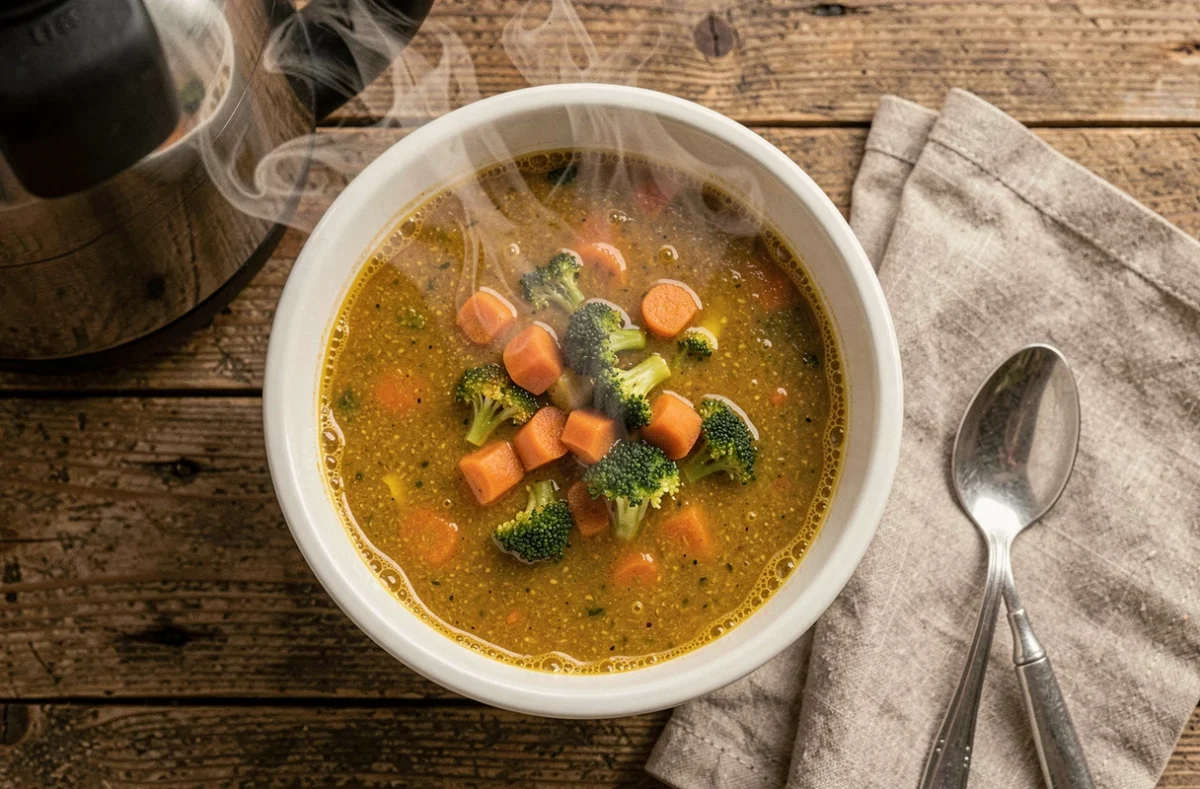
Reducing the starting liquid by about a quarter compared with the original recipe is a good starting point for most frozen vegetables. This reduction compensates for the water released as they thaw without risking a level that is too low in the jug.
- Watery vegetables (courgettes, tomatoes, leeks) release a lot of water: reduce the stock by a good quarter, or even more, and check the consistency at the end of the cycle before adding more liquid if needed.
- Root vegetables (carrots, sweet potatoes, butternut squash) release less water but take longer to cook from frozen: choose a long program or run another cooking cycle if the texture is still grainy.
- Leafy vegetables (spinach, broccoli) soften quickly and produce a final volume that is significantly smaller than their apparent starting volume: do not overfill the jug, and add the liquid gradually if the appliance allows it.
Adjusting the liquid to suit the type of vegetable rather than applying a single rule helps avoid the two common pitfalls: watery soup and purée stuck to the bottom.
Nutritional value of soups made with frozen vegetables
One argument often made in favour of using only fresh vegetables is the supposed loss of nutrients caused by freezing. Available data paints a more nuanced picture. Industrial freezing takes place soon after harvest, preserving a good proportion of the vitamins, particularly vitamin C. Fresh vegetables that have spent several days in cold storage and then in a supermarket display may have lower vitamin levels than their frozen equivalents.
The choice between fresh and frozen depends on the time between purchase and preparation. A leek from the market cooked the same day will probably contain more micronutrients. The same leek left in the fridge for five days will contain less. For a midweek soup made with whatever is left in the freezer, frozen vegetables are nothing to be ashamed of.
Cooking in a heated blender, regardless of where the vegetables come from, degrades some heat-sensitive vitamins. Program duration matters: a short cycle preserves nutrients better than a prolonged program. If the texture is right after the first cycle, there is no need to run a second one.
Frozen vegetable soups: common cooking mistakes
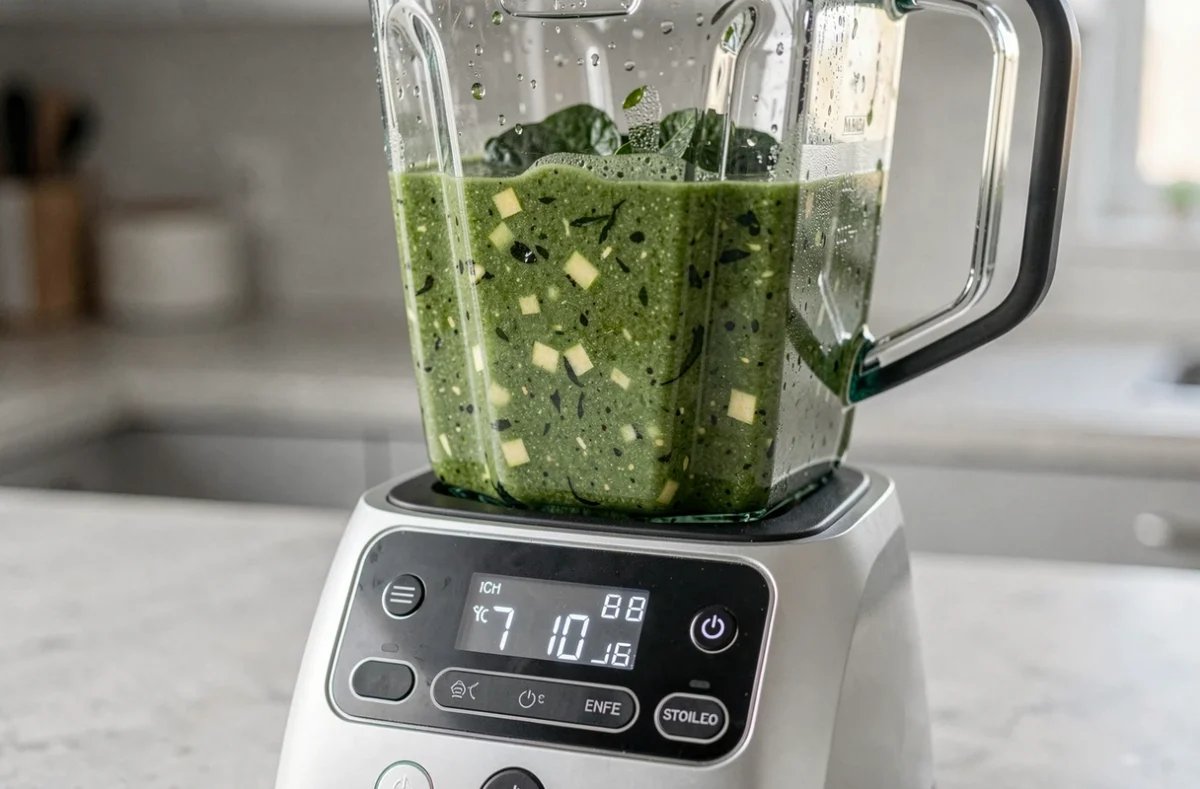
Forums for heated blender users (Moulinex, Ninja, Magimix) highlight recurring problems. Some are related to the appliance, others to preparation.
A frozen block that prevents the blades from turning
Pouring in an entire bag of compacted frozen vegetables can jam the blades or prevent them from stirring at the start of the cycle. The simplest solution is to break the block into pieces before adding it, without thawing it first. There is no need to thaw vegetables before cooking, but avoid forming a compact mass at the bottom of the jug.
Overflow during the cycle
Frozen vegetables take up more space in the jug when first added, then their volume decreases as they thaw and cook. The risk of overflow is greatest at the start, when the liquid bubbles around pieces that are still bulky. Filling the jug to the maximum with frozen vegetables means exceeding its actual capacity once heating begins.
- Observe the maximum fill line, counting the vegetables and liquid together, not separately.
- Choose two medium batches rather than overfilling the jug, especially with vegetables that expand (broccoli, cauliflower).
- Leave at least a few centimetres of space beneath the lid for steam.
Filling the jug two-thirds full gives the best results in terms of even cooking and final texture.
A velouté that remains grainy
Some frozen root vegetables, particularly carrots and butternut squash, can remain grainy if the cooking time is too short. Their density, combined with the very low starting temperature, means they take longer to soften completely. A second cooking cycle or extra blending after the main program solves the problem in most cases.
Frozen vegetable soup made in a heated blender works all year round, as long as you treat frozen vegetables for what they are: an ingredient that releases water, starts out cold and requires the liquid-to-vegetable ratio to be adjusted. Adapting these settings for each batch takes just a few seconds and makes a difference to the final texture.